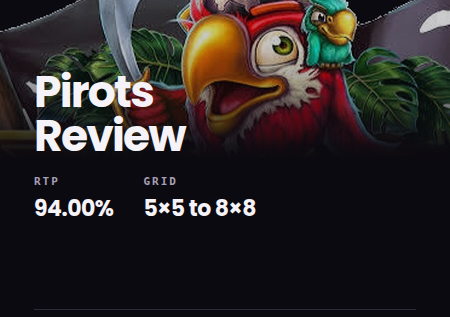

Pirots scores 4 out of 10, and the number that settles it is 94.00 percent. That is the lowest return of any slot released this decade that I have reviewed, and ELK Studios does not print it on its own game page for Pirots anywhere. Only a pair of much older classics in the set return less than that.
The studio page gives you exactly two figures. A grid of five reels by five rows, and a maximum win of 10,000 times your bet. Everything else a person might reasonably want before funding an account is simply absent. No return, no volatility rating, no hit frequency, no bet range, not even a release date. When I went looking for those numbers elsewhere, the sources that filled the gap disagreed with each other, and two of them disagreed with ELK about the one figure the studio does publish.
There is one real mercy here, and I want to give it full weight. Pirots runs a single fixed return. There is no family of reduced builds for a casino to pick from, which is the trap that cost Wanted Dead or a Wild and Sweet Bonanza Xmas most of their marks on this site. Whatever lobby you open Pirots in, you are playing the same mathematics. That is rarer than it should be.
So this review does three things. It settles which return figure is the real one, it shows you what the disagreement over the maximum win is actually worth in money, and it prices an hour of play against the slots sitting next to it. The game is a pleasant thing to watch. It is also one of the most expensive hours in the set, and those two facts have nothing to do with each other.
Read the right hand column carefully. Where it says a figure was reported rather than published, that means ELK did not put the number out and somebody else measured or obtained it. I have counted the sources for each one so you can see how much weight it carries.
| Specification | Pirots |
|---|---|
| Studio | ELK Studios, founded in 2013, licensed in Great Britain, Malta, Romania, Ontario and Greece |
| Released | 7 March 2023, the date given by four databases. AboutSlots alone says 6 March |
| Return to player | 94.00%, one fixed build with no operator range. Reported by five databases, published by ELK nowhere |
| Volatility | High on three databases, medium to high on two. ELK uses neither word |
| Hit frequency | 26.80%, reported by three databases and not published by the studio |
| Maximum win | 10,000x the bet on ELK’s own page. SlotCatalog says 20,000x, ClashOfSlots says 25,000x |
| Odds of the maximum win | Not published by anyone |
| Grid | Five reels and five rows at the start, opening to eight by eight when Bomb symbols clear space |
| How wins pay | Birds collect gems of their own color from adjacent positions, so there is no payline count |
| Bet range | €0.20 to €100.00 on the data sheets, and each lobby may set a lower ceiling inside that |
| Cheapest feature entry | 3x the bet, which is 60 cents at the minimum stake, and it buys a better chance rather than the feature |
ELK’s own game page carries two of these eleven figures, the grid and the maximum win. Every other number in this table came from somewhere else.
I score every game on the same four criteria, and the method is written out on how I rate casinos and games. Pirots splits unusually wide. It takes a good mark for how cheaply you can reach its features, and the thinnest disclosure I have had to work with on any game here.
| Criterion | Score | Why |
|---|---|---|
| Return to player | 4 / 10 | 94.00 percent is the lowest headline return of any slot released this decade that I have reviewed, and ELK prints it on no page of its own. It scores at all because there is one build and no range for a casino to choose from |
| Cost of reaching the feature | 5 / 10 | The ladder starts at three times the bet, which is cheap by the standards of this set. Not one of the five modes has a published return, so none of them can be priced |
| Volatility honesty | 2 / 10 | No volatility word, no hit frequency, no odds for the maximum win. The 26.8 percent on this page is a third party figure, and the one number ELK does publish is contradicted twice |
| Session survivability | 6 / 10 | Better than the volatility rating suggests. A win roughly every four spins and a twenty cent minimum keep a balance moving, but the six percent edge empties fifty euros a third faster than the slots around it |
| Overall | 4 / 10 | Average of 4.25, rounded down |
The two low marks are both about disclosure rather than design. Pirots is a well built game that tells you almost nothing about itself.
It is 94.00 percent. I want to explain why the question comes up at all, because the answer tells you something about how slot information travels.
Five independent databases list Pirots at 94.00 percent, and none of them lists a second version. SlotCatalog goes further and says in its own words that ELK decided a fixed 94 percent was a better choice than adjustable ranges. That is five sources agreeing, which is as close to settled as this corner of the industry gets.
The 96.78 figure comes from one place. A single casino site carries it in the page title while its own specification table on the same page says 94.00 percent. One of those two numbers is a template artifact, and the one contradicted by five other sources is the one to drop. If you have seen 96.78 quoted for Pirots, that is where it came from.
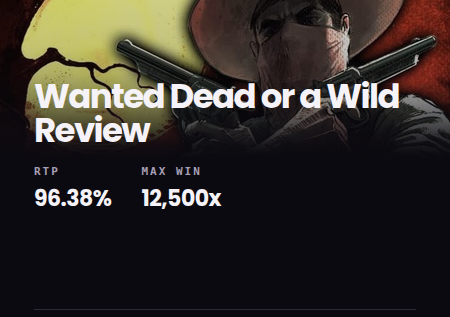
Now the part that matters more than the arithmetic. A single fixed return is genuinely good news, and I say that having spent the last few reviews on games that do the opposite. Wanted Dead or a Wild ships four returns from 96.38 down to 88.42 percent with no label saying which one your casino runs. Sweet Bonanza Xmas ships six across three unlabeled ranges. On both of those, the game you load is a lottery you were not told you entered.
Pirots has no lottery. Whichever casino you open it in, the mathematics is identical. The catch is that the single number everybody gets is a low one, and 94.00 percent means the house keeps six cents of every euro you put through it. The full picture of how returns are published and where to find yours sits on the slot RTP page.
| Game | Published returns | Can you tell which one you are playing? |
|---|---|---|
| Pirots | One, 94.00% | Yes, there is only one |
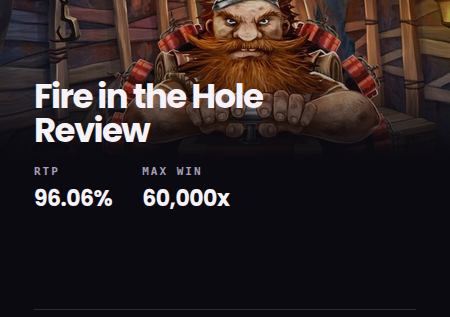
| Fire in the Hole xBomb | Three, 96.06% down to 90.02% | Yes, the studio labels all three |
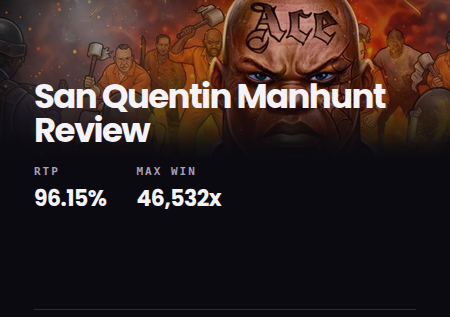
| San Quentin Manhunt | Three, 96.15% down to 92.07% | No, the studio names only the top one |
| Wanted Dead or a Wild | Four, 96.38% down to 88.42% | No, none of the four is labeled |
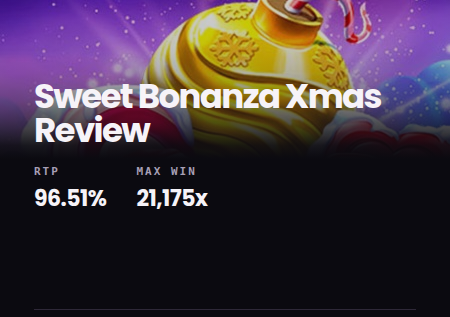
| Sweet Bonanza Xmas | Six, across three ranges | No, and the ranges overlap |
Pirots wins this table and still scores 4 out of 10, because having one honest number does not help if that number is 94.00 percent.
ELK publishes one figure about how Pirots pays, and that figure is the maximum win. Its own game page calls it a maximum potential of 10,000 times the bet. Two of the databases that fill in everything else ELK left out then contradict it.
SlotCatalog and one casino site both say 20,000 times. ClashOfSlots says 25,000 times. AboutSlots and FruitySlots agree with ELK at 10,000 times, and so does the LeoVegas lobby listing, which puts the figure in its own page title. So the studio plus three places say 10,000x, two say 20,000x, and one says 25,000x.
Here is what the disagreement is worth. At the twenty cent minimum stake, those three figures are three different amounts of money for the same winning spin.
| Figure quoted | Who says it | Pays at €0.20 a spin | Pays at €1.00 a spin |
|---|---|---|---|
| 10,000x | ELK Studios, AboutSlots, FruitySlots, the LeoVegas lobby | €2,000 | €10,000 |
| 20,000x | SlotCatalog and one casino database | €4,000 | €20,000 |
| 25,000x | ClashOfSlots | €5,000 | €25,000 |
Three thousand euros of difference on one spin at the minimum stake, and the only source with a license to build the game is the one quoting the smallest number.
I go with 10,000 times, because the studio that wrote the mathematics says so and three other places agree. But notice what is missing even from the figure everybody argues about. Nobody publishes the odds.
That absence has a cost you can measure. On Fire in the Hole, Nolimit City publishes that the 60,000x ceiling arrives about once in 2,400,000 spins, so I could tell you it is four thousand hours of play for one expected maximum win. On San Quentin Manhunt the same studio publishes about one in 15.9 million, which is 26,500 hours. For Pirots that calculation cannot be done at all. The ceiling is a number with no probability attached, which makes it advertising rather than information.
Three databases report a hit frequency of 26.80 percent for Pirots. ELK publishes nothing, so this is a reported figure rather than a studio one, but three sources landing on the same two decimal places is worth taking seriously.
If it is right, it hits more often than most of the high and extreme volatility games in this set, and more often than one the industry files under low volatility. A paying spin arrives roughly once in every four, which is not what the word volatile usually describes.
| Game | Volatility label | Hit frequency | A win roughly every |
|---|---|---|---|
| Sugar Rush | High | 34.48% | 2.9 spins |
| Pirots | High to medium high | 26.80% | 3.7 spins |
| Fire in the Hole xBomb | Extreme | 25.98% | 3.8 spins |
| Starburst | Low | 22.60% | 4.4 spins |
| San Quentin Manhunt | Extreme | 20.92% | 4.8 spins |
Pirots hits more often than Starburst, a game the industry files under low volatility. The labels and the measured numbers are not telling the same story, and the slot volatility page works through why.
This is the one place where Pirots earns real credit, even though the credit belongs to its design rather than its disclosure. A win every four spins keeps a small balance alive far longer than the volatility label implies, and the twenty cent minimum means you can test that for yourself cheaply. What the frequent hits do not do is change the price, because the six percent edge is taken out of the same money either way.
X-iter is ELK’s name for paying a fixed multiple of your bet to skip ahead. Pirots has five of them, and the ladder starts unusually low. Sixty cents at the minimum stake buys you a better spin. That is worth something, and in a moment I will show you why it is worth less than it looks.
| Mode | Price | Cost at €0.20 | What it buys | Published return |
|---|---|---|---|---|
| Bonus Hunt | 3x the bet | €0.60 | One spin with more than four times the usual chance of reaching the bonus | None |
| Feature Bonanza | 10x the bet | €2.00 | One spin with a guaranteed feature award, so at least one bird collects | None |
| Maximum Grid Size | 25x the bet | €5.00 | One spin played on the full eight by eight grid | None |
| Bonus Game | 100x the bet | €20.00 | The free spins bonus, entered directly | None |
| Super Bonus | 500x the bet | €100.00 | The bonus from the full grid, with upgrade symbols lifting every gem | None |
Five prices, five descriptions, and not one return. On Fire in the Hole and San Quentin Manhunt the studio publishes the return of every buy, so you can see which ones are worse value than the base game.
Look closely at the cheapest one, because it is the clearest example of a disclosure that discloses nothing. Bonus Hunt costs three times the bet and ELK says it gives you more than four times the chance of landing the bonus. Four times what, though? The studio never publishes how often the bonus arrives on an ordinary spin. Four times an unpublished number is still an unpublished number, and you cannot work out whether sixty cents is cheap or expensive without the baseline.
The same problem applies at the top of the ladder. Super Bonus costs five hundred times the bet, which is one hundred euros at the minimum stake and five thousand euros at the maximum. On most slots a purchase of that size returns slightly less than the base game, because the studio prices the certainty into it. Whether that is true of Pirots is unknowable from any published source, and that is why this criterion scores 5 rather than 8.
This is the arithmetic I would want before loading any slot, and it is the one almost nobody shows you. A 94.00 percent return means a six percent house edge. Six hundred spins is a comfortable hour on a game at this pace. Multiply your stake by six hundred and take six percent, and you have the expected cost of that hour.
| Stake per spin | Turnover in an hour | Expected cost of the hour | Over a three hour evening |
|---|---|---|---|
| €0.20 | €120.00 | €7.20 | €21.60 |
| €0.50 | €300.00 | €18.00 | €54.00 |
| €1.00 | €600.00 | €36.00 | €108.00 |
Expected cost, not guaranteed cost. Any single hour can finish up or down by far more than this, which is exactly what the hit frequency and the ceiling are describing.
Now put that next to the rest of the site. The cost per hour table on the games page prices a typical 96.05 percent slot at 11.85 euros an hour at fifty cents a spin. Pirots at the same stake is 18.00 euros. That is 6.15 euros more every hour, which is 52 percent more expensive for a game that looks and sounds no different.
The clearest way to feel it is to ask how long fifty euros lasts. At six percent, a fifty euro balance supports about 833 euros of turnover before it is gone, which is roughly 4,170 spins at twenty cents, or just under seven hours. At 96.05 percent the same fifty euros supports about 1,266 euros of turnover, roughly 6,330 spins, or about ten and a half hours.
So choosing Pirots over a 96 percent slot costs you around three and a half hours of the same fifty euros. Not a worse experience, not a rigged outcome, just less time for your money. That is the entire practical meaning of the two point gap in the return, and it is why the return deserves more of your attention than the ceiling does.
These four apply to every slot, and they are worth a minute each because all four can quietly cost you more than the house edge does. I check them on every casino I review, and the answers differ from one lobby to the next.
The return printed in the information panel. Open the game, find the information or paytable screen, and read the return it states. On Pirots it should say 94.00 percent, because there is only one build. If your lobby shows something else, that is the figure that governs your money, not anything written here or on the studio page.
Wagering weighting, and whether a feature buy voids the bonus. Slots usually count fully toward bonus wagering, and many casinos exclude feature purchases entirely while a bonus is live. Buying a Super Bonus for a hundred euros and having it count for nothing, or void the bonus outright, is an expensive way to learn the rule.
The maximum stake allowed while a bonus runs. A five euro cap is common and a four euro cap is not unusual. Pirots goes to one hundred euros a spin on the data sheets, so a single large spin can breach the cap and forfeit the balance. The limits for every casino reviewed here are gathered on the maximum bet and withdrawal limits page.
The withdrawal ceiling on bonus winnings. Many casinos cap what you can take out of a bonus, often at five hundred euros a day or seven thousand a month. A ten thousand euro ceiling win on Pirots at a one euro stake would take weeks to withdraw under rules like those, which is worth knowing before rather than after.
The demo runs the same mathematics as the real money game, and on this particular slot it answers a question no published source can. Open the information panel in the demo and read the return for yourself. You will also find out within a few minutes whether a win every four spins feels generous or merely busy, which is the honest reason to try it before funding anything.
One practical note. The sequels sit alongside it in the library and they are different games with different numbers, so check which one you have opened. Pirots 2 runs a six reel grid and a 25.4 percent hit frequency against this one’s 26.80, on the same 94.00 percent return. The free slots library holds all of them.
Two thirds of the casinos I have reviewed carry ELK Studios games, so Pirots is easy to find. The four below are the highest scoring of the ones that do, and every one of them was reviewed and scored before it appeared on this page. Since Pirots has one fixed return, you do not need to worry about which build a lobby runs here, which is a sentence I rarely get to write.
| Casino | Score | Full review |
|---|---|---|
| 22Casino | 7 / 10 | Read the review |
| National Casino | 7 / 10 | Read the review |
| Playfina Casino | 7 / 10 | Read the review |
| CasinoChan Casino | 7 / 10 | Read the review |
Seven out of ten is as high as any casino stocking ELK games has scored with me. The only eight on this site, BetLabel, does not carry the studio at all, so it is not an option for Pirots.
What is the RTP of Pirots?
94.00 percent, reported consistently by five slot databases. ELK Studios does not publish the figure on its own game page, so confirm it in the information panel inside the game before you play for money.
Does Pirots have more than one RTP version?
No, and that is its strongest feature. Every source lists a single fixed 94.00 percent build with no adjustable range, so the mathematics is the same in every lobby that carries it.
What is the max win on Pirots?
ELK states 10,000 times the bet, which is 2,000 euros at the twenty cent minimum. SlotCatalog says 20,000 times and ClashOfSlots says 25,000 times, and no source publishes the odds of reaching any of them.
How volatile is Pirots?
Three databases call it high and two call it medium to high. ELK uses no volatility word at all, so the label on this game is somebody else’s judgment rather than a published specification.
How often does Pirots pay a win?
The reported hit frequency is 26.80 percent, which is a paying spin roughly once in every 3.7. That is more often than Starburst, a game the industry files under low volatility, and more often than most of the high volatility slots reviewed here.
Can you play Pirots for free?
Yes. The Pirots demo runs on play money with no account and no deposit, and it is the only place you can read the actual return your lobby serves before committing real funds.
How much does the Pirots bonus cost to buy?
Direct entry to the free spins bonus costs 100 times the bet, so 20 euros at the minimum stake. Cheaper modes exist at 3x, 10x and 25x, and the Super Bonus costs 500 times the bet, which is 100 euros.
What does an hour of Pirots cost?
At 600 spins an hour the expected cost is 7.20 euros at twenty cents a spin, 18.00 euros at fifty cents and 36.00 euros at one euro. A typical 96.05 percent slot costs 11.85 euros an hour at fifty cents, so this one is 52 percent more expensive.
How big does the Pirots grid get?
It starts at five reels by five rows and opens to eight by eight as Bomb symbols clear space. A 25x purchase starts one spin at the maximum size, and the 500x Super Bonus begins the bonus round there.
Is Pirots worth playing?
It scores 4 out of 10 here, held down by a 94.00 percent return and by how little ELK publishes. If you want the mechanic, play it in the demo first and keep the stake at twenty cents, where an hour costs about 7.20 euros rather than 36.

Nolimit City is the studio I have praised most on this site, and this review marks it down. That is deliberate. On Fire in the Hole it published its reduced builds with identifiers and earned the only ten I have given for disclosure. On its newest prison game it publishes more operational detail than ever and stops naming the builds.
Everything here was checked against the studio’s own page first and two independent databases second. Where they disagreed, I printed the disagreement rather than picking a side. If you find a casino running the 94.13 or 92.07 build and saying so openly, write to me and I will add it.
18+. Gambling can be addictive. This game carries a six percent house edge, which is wide for a slot built this decade, and a maximum win with no published odds attached to it. The 94.00 percent return describes millions of spins rather than your session. If gambling stops being entertainment, stop and seek help.