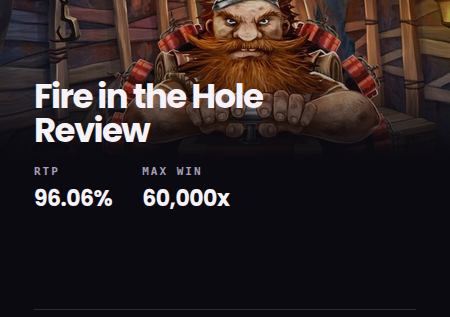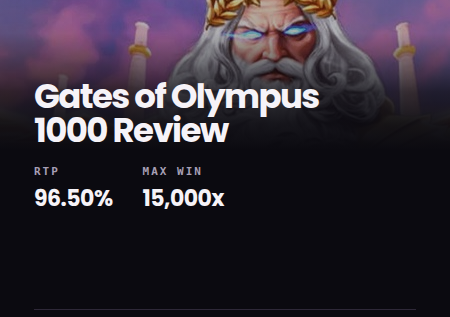

Gates of Olympus 1000 returns 96.50 percent, exactly what the original returns, and caps at 15,000x. Pragmatic publishes the hit frequency and nothing else.
Gates of Olympus 1000 returns 96.50 percent, exactly what the original returns, and it publishes two more return figures that almost nobody reads. One of them is lower, and it is the one attached to the button most players press. I score it 6 out of 10.
This is a Pragmatic Play slot from December 2023, built on a six by five grid where symbols pay anywhere rather than on lines. The sequel keeps the math of the original and triples the ceiling, from 5,000x to 15,000x, by stretching the multiplier ladder to 1,000x.
I opened the demo on this site and read every figure below from the game’s own rules screens on 22 October 2026. Where the studio publishes something different from the game, I have printed both.
| Figure | What it says | Where I read it |
|---|---|---|
| Return to player | 96.50% | Rules screen inside the game, page 4 of 7 |
| Return with the ante bet | 96.50% | Same screen |
| Return when buying free spins | 96.49% | Same screen |
| Volatility | High, with the studio’s own definition printed beside it | Same screen, and the loading splash |
| Hit frequency | 28.41% | Pragmatic Play’s own demo site |
| Maximum win | 15,000x the bet, as a hard cap that ends the round | Rules screen, page 6 of 7 |
| Multiplier range | 2x to 1,000x, in sixteen fixed steps | Rules screen, page 2 of 7 |
| Grid | Six reels, five rows, symbols pay anywhere | Studio game page and the game itself |
| Stake range | 0.20 to 300.00 in the game, 0.2 to 240 on the studio site | Both, and they disagree |
| Bonus buy | 100x the base bet, four scatters guaranteed | Rules screen, page 3 of 7 |
| Feature frequency | Not published | Nowhere I could find |
| Odds of the 15,000x | Not published | Nowhere I could find |
Read on 22 October 2026, in a demo running in dollars. Nine of these twelve rows carry a real figure, which is more than most studios give, and the three that are missing are the three that would tell you how the game behaves.
Games on this site are scored on four criteria of their own, each marked out of ten, with the average rounded to a whole number and a half rounding up. Where a studio publishes nothing a criterion can be built from, I leave that criterion unscored and average the rest. The bands sit on my scoring method.
| Criterion | Score | Why |
|---|---|---|
| Return to player | 9 / 10 | 96.50 percent sits at the bottom of the 96.50 to 96.99 band, printed inside the game rather than only in marketing, and identical to the original |
| Cost of reaching the feature | 6 / 10 | The buy costs 100 times the base bet, the bottom of the 100x to 199x band. Twenty euros at the minimum stake, which is reachable, and a hundred base spins for one round |
| Volatility honesty | 4 / 10 | One of the three figures is published, the hit frequency at 28.41 percent, and it sits on the studio’s demo site rather than in the game. Feature frequency and the odds of the cap are missing |
| Session survivability | Not scored | The band is built from the number of spins between features. Pragmatic publishes no such figure for this game, so I will not invent one |
Nine, six and four average to 6.33, which rounds to 6. That is the same score the original holds, which is the honest answer, because the two games share a return figure and differ only in how far the tail stretches.
Six is a middle score and it is earned. The return is good, the disclosure is better than most, and the game still will not tell you how often the feature arrives or what the ceiling is worth in odds.
Page four of the rules screen carries three lines that most players will never open. I am reproducing them because the difference between them is the whole point of this review.
| How you play | Return | What it costs you |
|---|---|---|
| Ordinary spins | 96.50% | Nothing extra |
| With the ante bet switched on | 96.50% | 25 percent more per spin, and the buy button is disabled |
| Buying the free spins round | 96.49% | 100 times the base bet, and one hundredth of a point off the return |
Quoted from the rules screen on 22 October 2026. One hundredth of a percentage point is one cent per hundred euros staked, so this is not a warning about money. It is a fact about which figure applies to the way you actually play.
Two things are worth drawing out. The ante bet costs a quarter more per spin and returns exactly the same percentage, which means it is neither a trap nor a bargain. It buys you a doubled chance of landing the round naturally, paid for in turnover rather than in edge.
The buy is the one that moves, and it moves down. Most studios publish one number and let you assume it covers everything. Pragmatic publishes the figure for the button it sells you, and the figure is slightly worse than the game you were already playing.
I would rather have that than silence. Sugar Rush does the same thing and it is the reason that review scores where it does. Most of the games on this site publish one return and stop.
The loading screen says win up to 15,000x bet. Page six of the rules says what that actually means, and the wording matters.
The maximum win is limited to 15,000x the bet. If the total win of a round reaches that figure the round ends immediately, the win is awarded up to the cap, and all remaining features are forfeited.
Read the last four words again. Not paused, not carried over. Forfeited. If you are eight spins into a fifteen spin round and the counter hits the ceiling, the rest of the round stops existing. That is standard across the industry now, and it is still worth knowing before you see it happen.
| Game | Cap | Odds of reaching it |
|---|---|---|
| Gates of Olympus 1000 | 15,000x | Not published |
| Gates of Olympus | 5,000x | Not published |
| Duck Hunters | 30,000x | 1 in 22 million, published by the studio |
One studio reviewed here publishes the probability attached to its own headline number. Until Pragmatic does the same, 15,000x is a ceiling with no distance marked on it.
Multiplier orbs land at random on any reel, in the base game and in free spins. The game lists every value they can take, which is more than most slots will tell you.
| Where the ladder sits | Values |
|---|---|
| Small | 2x, 3x, 4x, 5x, 6x, 8x |
| Middle | 10x, 12x, 15x, 20x, 25x |
| Large | 50x, 100x, 250x |
| The two that sell the game | 500x and 1,000x |
Sixteen fixed values, read from page two of the rules. What the game does not publish is how often each one appears, which is the figure that would turn this ladder into a probability.
Here is how they combine. Wins pay, winning symbols vanish, new ones fall in, and the tumbling continues with no stated limit. When the sequence ends, every multiplier orb on the screen is added together and the total win is multiplied by that sum.
Added, not multiplied by each other. Two 500x orbs make 1,000x, not 250,000x. That single word is why the cap sits at 15,000x and not somewhere absurd, and it is printed plainly in the rules.
Both games sit in the same lobbies, often side by side, and the 1000 is sold as the bigger one. Here is every difference I could verify, and the one that does not change.
| What changes | Gates of Olympus | Gates of Olympus 1000 |
|---|---|---|
| Return to player | 96.50% | 96.50% |
| Hit frequency | 28.82% | 28.41% |
| Volatility badge | Medium | High |
| Maximum win | 5,000x | 15,000x |
| Top multiplier | 500x | 1,000x |
| Free spins trigger | Four scatters | Four scatters |
| Free spins awarded | 15 | 15 |
| Buy price | 100x the base bet | 100x the base bet |
| My score | 6 / 10 | 6 / 10 |
Hit frequencies come from the studio’s own demo site, read on 22 October 2026. Everything else came from inside each game.
Now read that table as a trade rather than an upgrade. The return is identical, so the money coming back over the long run is the same. The ceiling triples and the volatility badge moves from medium to high, which means the same money is being redistributed toward rarer, larger wins.
The hit frequency confirms it in a small way. The sequel pays something on 28.41 percent of spins against 28.82 percent on the original. That is four spins in a thousand, which you will never notice, and it points in exactly the direction the badge says.
So the honest summary is this. You are not buying a better game by playing the 1000, and you are not being cheated either. You are moving the same return further out along the tail, and the studio tells you so on the badge.
The free spins round can be bought from the base game for 100 times the current base bet, with four scatters guaranteed on the triggering spin. In the demo at a two dollar bet, the button read exactly 200 dollars.
My method scores a published buy price on its own band, and 100x sits at the bottom of the 100x to 199x band, which is a six. It is reachable at the minimum stake, where a round costs twenty euros, and it is still a hundred ordinary spins converted into one feature.
| Game | Buy price | Score |
|---|---|---|
| Big Bass Bonanza | No buy at all | 10 |
| Gates of Olympus 1000 | 100x the base bet | 6 |
| Gates of Olympus | 100x the base bet | 6 |
| Immortal Romance | No buy, best room fifteen triggers deep | 3 |
No buy button is not automatically better. What the band measures is how far the good part of the game sits from your first spin, whether the distance is priced in money or in time.
One detail the rules make explicit and the interface does not. Switching the ante bet on disables the buy button entirely. You can double your natural chance or you can pay for the round, and the game will not let you do both.
The minimum bet in the demo was 0.20 and the maximum was 300.00. Pragmatic’s own demo site lists the range as 0.2 to 240, which is the first thing on this page where the studio and the game disagree. The game is the one that binds, because it is the one you are playing.
| What fifty euros is | At the 0.20 minimum |
|---|---|
| Ordinary spins | 250 spins |
| Spins that return something, at 28.41 percent | About 71 of those 250 |
| Bought free spins rounds, at 100x | Two rounds, with ten euros left |
| Spins with the ante bet on, at 0.25 each | 200 spins |
My arithmetic from the published figures, not the studio’s. The number missing from this table is how many of those 250 spins would reach the free spins round on their own, because nobody publishes a feature frequency for this game.
That missing row is the whole reason this game scores a six rather than an eight. I can tell you what a session costs and roughly how often a spin pays. I cannot tell you how long you would wait for the thing the game is built around.
The game is the same everywhere. The terms wrapped around it are not, and that is where a session quietly gets more expensive. Four things are worth thirty seconds each.
First, the return printed in the game information panel, every time you open the game at a casino you have not used before. Plenty of slots ship in more than one build, and that panel is the only place the figure you are actually playing is shown.
Second, how the game counts toward wagering, and whether buying a feature voids an active bonus. Slots usually count in full, but feature purchases are excluded under most terms and some casinos cancel the bonus outright for one. The wagering terms are where both of those live.
Third, the maximum stake allowed while a bonus is running. It is commonly five euros a spin, and going over it once is enough for a casino to void everything the bonus produced.
Fourth, the cap on what you may withdraw from bonus winnings. A large maximum win means nothing if the terms stop your payout well below it, and that ceiling is printed in the bonus terms rather than in the game.
The return figure on its own tells you nothing about what a session costs. What costs you money is the return multiplied by how much you push across the table, and a slot pushes a great deal. Six hundred spins in an hour is an ordinary pace once autoplay is running.
At 96.5 percent the house keeps 3.5 percent of everything staked. Here is what that is worth at three ordinary stakes, using the same model as my cost per hour table.
| Stake per spin | Wagered in an hour | House edge | Cost of the hour |
|---|---|---|---|
| €0.20 | €120 | 3.5% | €4.20 |
| €0.50 | €300 | 3.5% | €10.50 |
| €1.00 | €600 | 3.5% | €21.00 |
Six hundred spins an hour, the house edge applied to everything wagered in that hour. These are averages over a very long run, not a prediction for one session, and the swings in either direction are far larger than the edge.
The demo on this site runs the same build as the real money game, on a play money balance that resets when you reload. No account and no deposit. It is also where I read every figure above, and you can check all of them yourself in the rules screen.
If you want to compare the two games back to back, the original demo runs here as well, and the review of it carries the same figures read the same way.
Twenty seven of the 36 casinos I have reviewed list Pragmatic Play among their suppliers, which makes this one of the easiest games on the site to find. Seven of those twenty seven reach seven out of ten, the highest score any casino holds here.
| Casino | Score | Terms fairness | Bonus value | Full review |
|---|---|---|---|---|
| Playfina Casino | 7 / 10 | 6 / 10 | 7 / 10 | Read the review |
| National Casino | 7 / 10 | 6 / 10 | 6 / 10 | Read the review |
| HellSpin Casino | 7 / 10 | 6 / 10 | 5 / 10 | Read the review |
| 22Casino | 7 / 10 | 4 / 10 | 7 / 10 | Read the review |
| CasinoChan | 7 / 10 | 5 / 10 | 6 / 10 | Read the review |
Five of the seven are shown. Each casino score is the average of four criteria and the full working sits inside every review.
Playfina and National tie at the top on the overall score, and they tie again on terms fairness at six and on payouts at eight. Bonus value settles it, seven against six, so Playfina takes it.
One thing to carry in with you, and it is specific to this game. Pragmatic licenses lower return builds of several titles to operators who want them. The rules screen inside the game is where the figure you are actually playing appears. If it reads anything other than 96.50 percent, trust the screen and not this page.
What is the RTP of Gates of Olympus 1000?
The rules screen inside the game prints 96.50 percent, the same figure Pragmatic Play publishes on its own game page. It also prints 96.50 with the ante bet switched on and 96.49 when you buy the free spins round.
Is Gates of Olympus 1000 high volatility?
Yes, and the game says so itself. The loading screen carries a high volatility badge and the rules repeat it with the studio’s own definition, that such games pay out less often but with a better chance of a large win in a short span.
What is the maximum win in Gates of Olympus 1000?
15,000 times your bet, and it works as a hard cap. The rules say that when a round reaches it the round ends immediately, the win is paid up to the cap, and every remaining feature is forfeited.
How much does the bonus buy cost?
One hundred times your current base bet, which is twenty euros at the 0.20 minimum. Four scatters are guaranteed on the triggering spin, and buying the round returns 96.49 percent rather than 96.50.
What is the difference between Gates of Olympus and Gates of Olympus 1000?
The return is identical at 96.50 percent. The sequel triples the cap from 5,000x to 15,000x, doubles the top multiplier from 500x to 1,000x, and carries a high volatility badge where the original says medium.
How do the multipliers work in Gates of Olympus 1000?
Orbs land at random and take one of sixteen values from 2x to 1,000x. When a tumbling sequence ends, every orb on the screen is added together and the total win is multiplied by that sum, so two 500x orbs make 1,000x and not more.
How many free spins do you get?
Four or more scatters award fifteen free spins. Three or more scatters landing inside the round add five more, and the multiplier total carries across the whole round rather than resetting each spin.
What does the ante bet do?
It raises the stake by a quarter and doubles the chance of triggering free spins naturally, by putting more scatters on the reels. The return stays at 96.50 percent and the buy button is disabled while it is switched on.
What is the minimum bet in Gates of Olympus 1000?
The game showed 0.20 as the minimum and 300.00 as the maximum when I read it. Pragmatic’s own demo site lists the range as 0.2 to 240, so the two disagree at the top end and the game is the one that binds.
Why does this game score 6 out of 10?
The return earns nine and the buy price earns six. Volatility honesty scores four, because only the hit frequency is published, at 28.41 percent, while the feature frequency and the odds of the cap are missing.

I came to this from finance, which is probably why I read a casino the way I read a contract. The marketing sits on the homepage, and the clause that decides whether you get paid sits twelve pages down.
I am responsible for everything published here, including the gaps. I opened this game on 22 October 2026 and read the three return figures, the stake range and the cap clause from its own rules screens rather than from a press release. Where the studio’s demo site and the game disagree on the maximum bet, I have printed both instead of picking the tidier one. If you find the feature frequency published anywhere, send it to me and I will rescore the game and say that I did.
18+. Gambling can be addictive. A 96.50 percent return is a long run average across millions of spins and it describes no single session, including yours. A high volatility badge means the same money arrives more rarely and in larger pieces, which is harder on a small balance than the percentage suggests. If gambling has stopped being entertainment, free and confidential help is available in Slovenia through NIJZ.